The Border Never Sleeps
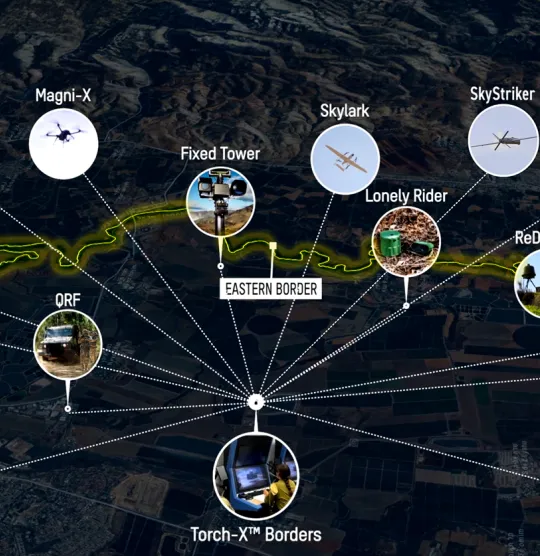
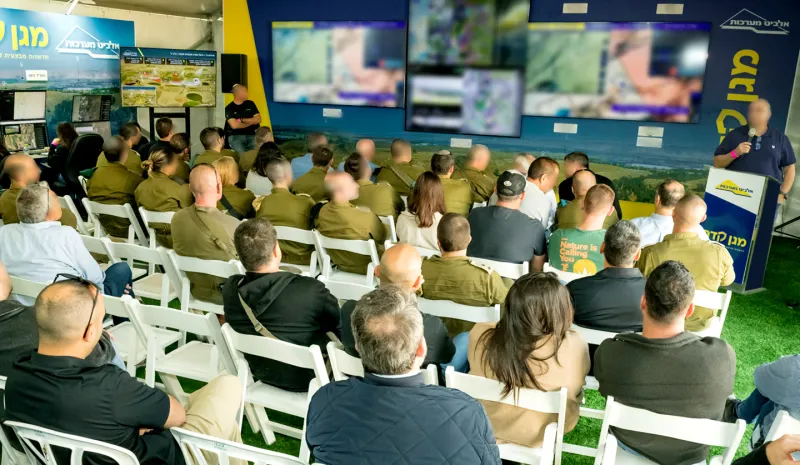
The recent live demonstration highlighted the Torch-X™ Borders solution’s ability to rapidly establish an integrated border-defense environment combining sensors, autonomous systems, AI-supported intelligence and command-and-control capabilities within a unified operational framework.
Key Takeaways
- Torch-X Borders enables the rapid establishment of an integrated border-defense environment combining sensors, effectors, autonomous platforms, intelligence assets and C4I systems into a single operational framework.
- Full integration into the border-defense network allows a single operator to manage and coordinate multiple systems simultaneously, supported by autonomous capabilities that maintain continuous area coverage.
- AI-assisted analysis and cloud-based intelligence systems help identify emerging threats, prioritize alerts and accelerate operational response cycles.
- A unified real-time operational picture connects military forces, civilian defense teams, unmanned systems and field units, enabling coordinated action based on multi-source information.
- UAVs and robotic systems conduct surveillance and higher-risk missions while reducing soldiers’ exposure and extending persistent operational presence.
A border is a dynamic operational environment where situations can change in an instant, often when forces are least prepared for them. Effective defense requires the ability to detect early indicators, rapidly understand the developing situation, and coordinate an appropriate response across military and civilian elements. Success depends not only on collecting information, but on transforming that information into a clear action fast enough to maintain operational advantage.
An advanced border defense concept that integrates digital command and control, AI-supported decision-making, autonomous systems, and civilian defense networks into a single operational ecosystem. The demonstration illustrated how these capabilities can work together to improve border protection and accelerate operational response, with minimal operators in the process.
This is the environment in which Elbit Systems' Network Combat Warfare organization operates. Nir, VP in the Network Combat Warfare line of business and currently leading a major international military digital transformation program, is helping armed forces adopt advanced digital capabilities. “We are already witnessing technologies that have the potential to transform military operations end-to-end,” he says. “Our focus is on helping organizations navigate the journey toward becoming fully digital forces.”
Two flagship solutions supporting this vision are Torch-X, a digital command-and-control system, and Torch-X Borders, an advanced border command-and-control solution. Built on a common technology foundation, both systems connect sensors, communication networks, weapon systems, autonomous assets, and third-party applications into a unified operational environment. This enables commanders and forces at all levels to operate from the same real-time operational picture and respond more effectively to emerging threats.
Testing the System on Real Terrain
Unlike maneuver operations that intensify during wartime, border defense is a continuous mission that requires constant readiness. The recent Torch-X Borders demonstration highlighted how existing sensor networks, including radars, cameras, and surveillance systems can be combined with an AI-powered decision layer to generate automatic alerts and identify emerging threats, even when human operators may not detect them in real time.
Beyond detection, the system can recommend or initiate responses by connecting communication networks, operational forces, and autonomous or robotic assets. The objective was not only to improve detection but also to shorten the time between identifying a threat and acting against it.
To validate the concept, Elbit Systems established an operational environment across a defined border sector and conducted a two-week demonstration featuring realistic operational scenarios. The entire environment was built in less than a month and brought together sensors, communications, AI analytics, command-and-control capabilities, UAVs and autonomous systems in a single integrated framework.
“The purpose of the demonstration was to examine a comprehensive approach to border defense against a large-scale surprise infiltration scenario similar to the 2023 October 7th Hamas attack against Israeli border and close-by civilians, towns and army bases,” says Nir. “Our focus was on understanding how military units, civilian defense teams, border sensors, and autonomous systems can operate as one coordinated network.”
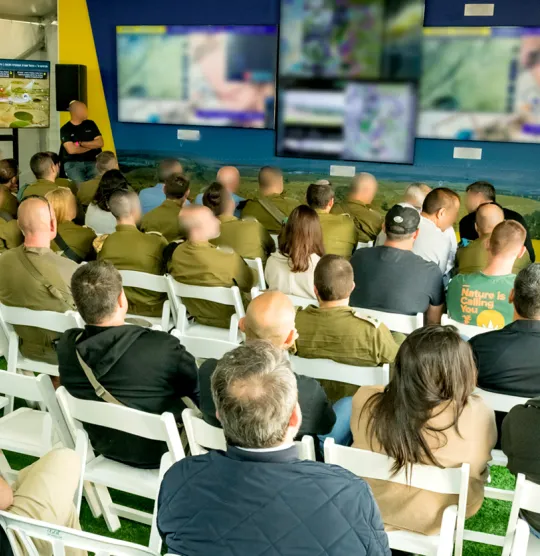
Each day of the demonstration featured a different operational scenario. Senior military commanders and defense officials observed how information from multiple sources was fused into a single operational picture, operated by one operator.
AI, and Fewer People in Riskier Places
"One of the most important key takeaways from the demonstration was the ability to reduce risk to soldiers by keeping them farther from the source of danger without compromising operational effectiveness, or, when direct engagement is required, enabling them to enter the fight under safer conditions and with a better understanding of the situation," Says Nir.
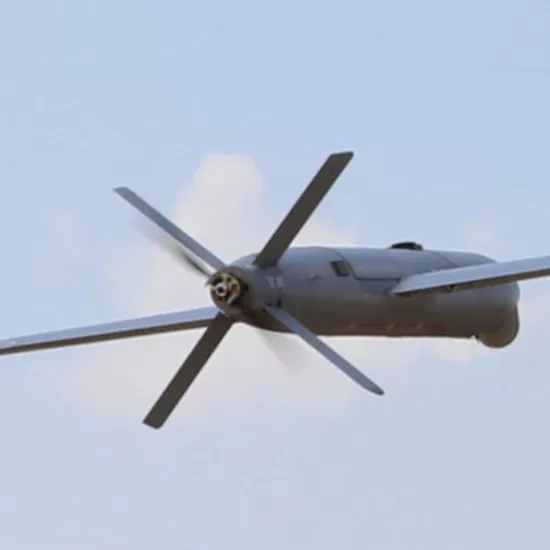
Nir explains that autonomy and AI play complementary roles. Autonomous platforms such as drones and robotic systems extend operational reach and perform higher-risk tasks, while AI helps operators process information faster and make better-informed decisions. Together they enable forces to achieve greater operational effectiveness while using manpower more efficiently.
“Autonomy allows forces to achieve greater operational impact with fewer personnel,” Nir says. “It extends operational reach, improves responsiveness, and helps reduce risk to soldiers without compromising mission effectiveness.”
A Company-Wide Demonstration
The demonstration was also significant in scope. “It was the largest demonstration we have conducted in terms of the number of systems involved while addressing a real operational challenge,” he says.
Looking ahead, Nir believes that growing uncertainty is reshaping how countries approach border security. The rapid spread of technologies such as drones has lowered the barriers to entry for advanced threats and increased the unpredictability of future conflicts. As a result, many countries, particularly in Europe, are examining lessons learned from recent operational events and seeking more adaptable defense architecture.
“The challenge is not predicting every future threat,” Nir concludes. “It is ensuring that your force can adapt quickly and respond effectively when the unexpected happens.”
Specs
- System type: Integrated border command-and-control solution
- Core capabilities: Digital command and control, AI-supported decision-making and operational coordination
- Sensor integration: Radars, cameras, surveillance systems and third-party sensors
- Autonomous systems: Supports UAVs, robotic platforms and other unmanned assets
- Civilian integration: Enables coordination between military units and civilian defense teams
- AI capabilities: Automated alerts, threat identification and decision support
- Technology foundation: Shares a common technological base with the TORCH-X command-and-control system
FAQ
What is a border command-and-control system?
A border command-and-control system connects sensors, communications networks, operational forces and command centers. It provides a shared picture of activity along the border and helps coordinate responses to emerging threats.
How is AI used in border security?
AI can analyze information from cameras, radars and other sensors to identify unusual activity, generate alerts and help operators prioritize potential threats.
What are the benefits of an integrated border-defense system?
An integrated system combines information and capabilities that might otherwise operate separately. This can improve situational awareness, reduce response times and support closer coordination between different forces.
How do digital command systems improve border protection?
Digital command systems distribute updated operational information across the force. This helps commanders and field units work from the same information and respond more quickly as a situation develops.
How are autonomous systems used in border defense?
Drones and robotic platforms can conduct surveillance, inspect high-risk areas and extend the reach of operational forces. They can also reduce the need to place personnel close to potential threats.
How can AI support military decision-making?
AI can process large amounts of information, identify patterns and recommend possible courses of action. The final operational decisions remain subject to the system’s configuration and the authority of human commanders.
Important Notice: Certain blog articles may contain forward-looking statements and are not intended to provide business, financial, or investment information. Please review our full disclaimer here.