

The Quiet Revolution of Logistics
When crises can begin with a natural disaster, a cyber disruption, or a blocked shipping lane, logistics is no longer just what happens after strategy is written. It is becoming part of the strategy itself.
Behind the most advanced modern defense technology solutions lies another story, quieter, less photographed, and often less discussed, yet without it even the most sophisticated system can remain only a promise. It is the story of logistics: the people, processes, infrastructure, spare parts, maintenance routines, software updates, training cycles, and supply chains that allow complex defense systems to keep operating when conditions are far from ideal.
In the past, logistics was often treated as the backstage of military power. It was what happened after a system was delivered, after a platform was deployed, and after an operational plan was approved. Today, that distinction is becoming outdated. The ability to maintain operational continuity under pressure has become a strategic capability in itself.
When global supply chains are disrupted, natural disasters damage infrastructure, conflicts last longer than expected, or forces are required to operate across several arenas at once, the question is no longer only what a system can do on its best day but whether it can keep doing it on difficult days.
The System Behind the System
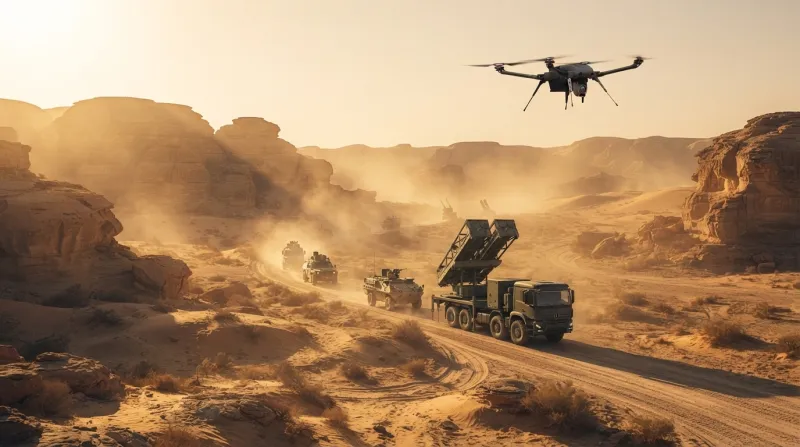
Modern defense platforms are no longer isolated machines. A UAV, an artillery system, a border protection network, or an electronic warfare solution is part of a larger ecosystem. It relies on sensors, communications, power, software, trained operators, maintenance crews, mission-planning tools, repair capabilities, and a continuous flow of technical knowledge.
A defense force operating advanced unmanned aircraft, for example, needs far more than the aircraft itself. It needs ground control stations, payload support, mission-planning procedures, trained crews, spare components, secure communications, and the broader infrastructure required to sustain operations. The same, of course, is true for land or maritime systems, C4I networks, training centers, and homeland security architectures.
This shift in paradigm requires defense companies to think differently about the full life cycle of their technologies. Delivery is no longer the endpoint, and in many cases it is the beginning of a long operational relationship that includes support, upgrades, adaptation to new threats, and continuous learning from the field.
Continuity as a Strategic Advantage
A force that can repair faster, replenish more efficiently, and adapt its infrastructure under pressure gains more than convenience: it gains freedom of action. It can continue operating while others slow down. In that sense, logistical resilience becomes a form of deterrence, because adversaries must assume that damaging one node will not necessarily stop the entire system.
This is especially relevant in a world where disruptions are not always military in nature. Extreme weather can close roads and ports. Pandemics can slow production lines. Cyberattacks can affect civilian infrastructure. Political tensions can delay the movement of goods. A shortage of a single component can create ripple effects across an entire operational chain.
Against this background, the ability to build modular, flexible, and maintainable systems is no longer a technical preference. It is part of operational planning. Systems must be designed not only to perform but also to be supported. They must be upgradeable, diagnosable, and adaptable to different users, climates, doctrines, and levels of local infrastructure.
The quiet revolution of logistics is therefore also a revolution in design philosophy. A system that is difficult to maintain, dependent on fragile supply lines, or too rigid to adapt can become vulnerable even if its core technology is advanced. A system built with continuity in mind gives the user something just as important as performance: confidence.
From Spare Parts to Smart Readiness
One of the major changes in defense logistics is the shift from reactive support to predictive readiness. Instead of waiting for a failure and then responding, advanced support models aim to identify patterns, monitor usage, and anticipate maintenance needs before they interrupt operations.
For defense organizations, this can have direct operational consequences. Better diagnostics can reduce downtime. Digital documentation can shorten repair cycles. Simulation-based training can help crews prepare for complex scenarios without overusing live platforms.
The result is not always dramatic in appearance, but it can be decisive in practice. A platform that returns to service faster may matter as much as a platform that flies farther. A command network that can be reconfigured quickly may matter as much as the sensors connected to it. A training ecosystem that keeps crews ready during periods of uncertainty may matter as much as the operational systems it supports.
The Hidden Layer of Resilience
This is particularly important for countries and organizations facing multiple types of pressure at once. A border agency may need to keep surveillance systems running during storms, civil emergencies, or infrastructure failures. An air force may need to maintain readiness while aircraft, UAVs, and simulators operate at high tempo. A homeland security organization may need communications and command systems that remain functional even when the civilian environment around them is unstable.
In each case, resilience is not created by a single product. It is created by the connection between products, processes, and people. It depends on how equipment is maintained, how knowledge is transferred, how quickly faults are identified, how easily systems can be upgraded, and how much operational independence the user can preserve over time.
For companies such as Elbit Systems, whose portfolio spans airborne systems, land systems, C4I, electro-optics, electronic warfare, training, and simulation, logistics is inseparable from the broader defense ecosystem. A mission training center, for example, is not only a simulator; it is part of readiness management.
When Efficiency Becomes Power
The strategic value of logistics is often revealed only when something goes wrong. A delayed shipment, a damaged component, a shortage of trained technicians, or an outdated maintenance process can expose weaknesses that were invisible during routine operations. Conversely, a well-built logistics architecture can turn complexity into stability.
This is why efficiency in defense logistics should not be confused with cost-cutting alone. The real goal is operational endurance. It is the ability to do more with fewer interruptions, keep systems available when demand rises, and move from routine to emergency without rebuilding the entire support model from scratch.
Important Notice: Certain blog articles may contain forward-looking statements and are not intended to provide business, financial, or investment information. Please review our full disclaimer here.