The Scale Test for Digital Warfare
Connecting a few systems is one challenge, but what happens when you connect 120 at the same time? Elbit Systems Sweden demonstrated what it takes to bring 120 nodes together into a single operational land-force network.
Digital transformation in land warfare is easy to describe and harder to prove. The promise is faster decisions, clearer situational awareness, and better coordination, but the real test begins when a network is crowded with users, data, voice, video, sensors, and command posts operating simultaneously.
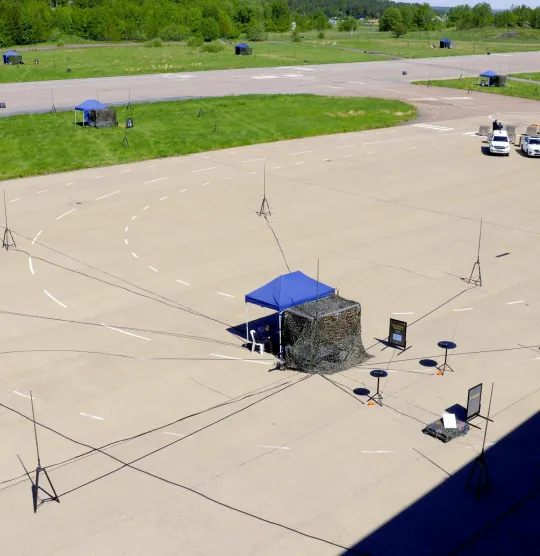
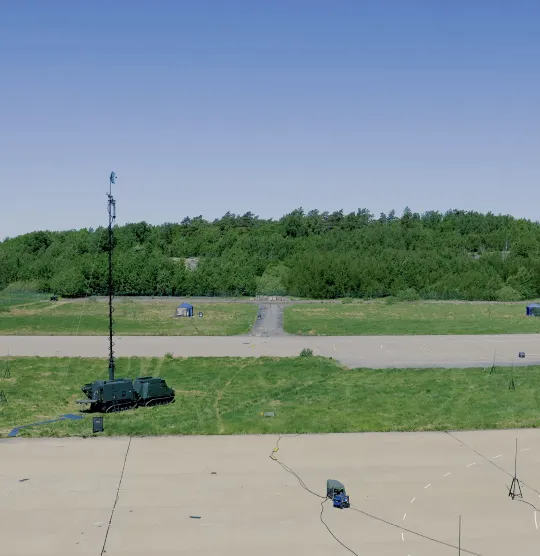
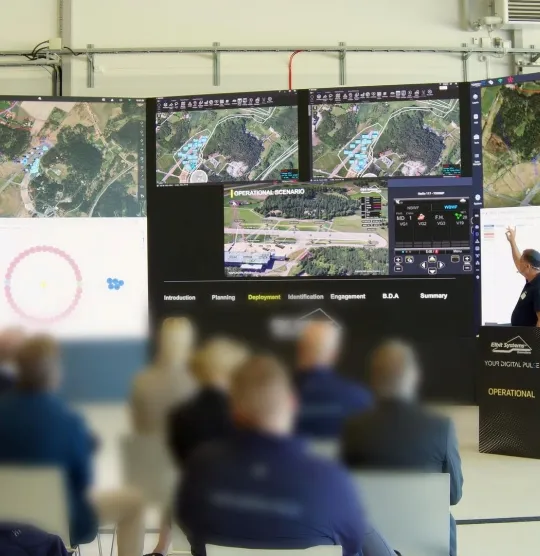
That was the purpose of the Sweden Digitalized Network Demonstration, carried out over two weeks near Gothenburg by Elbit Systems Sweden. The exercise connected 120 endpoints into a single digitalized land-force network. It demonstrated how a connected battalion operating within a brigade can plan, execute, and update a mission through a shared operational network.
“This was the first demonstration of its kind in Sweden that we are aware of at this scale,” says Yoav Poizner, VP Marketing, C4I & Cyber Division, Elbit Systems. “One of the major challenges of digitization is scale. When you connect more and more systems, networks can struggle to handle the load.”
The event brought together customers, partners, and OEMs from Sweden, NATO countries, Europe, and beyond. Its message was that a fully digital mission process can operate at scale.
The Scale Test
As users join the network, as video and data move across echelons, and as command-and-control systems share operational pictures in real time, the network must continue functioning without collapsing under its own complexity.
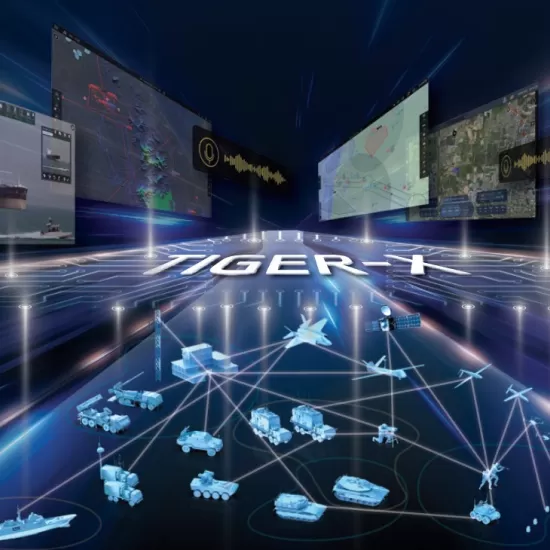
The demonstration showed how the network carried voice, data, and video, incorporated HF connectivity, and used TIGER-X to connect different networks. It also demonstrated links to third-party systems, including A-TAK, as well as connectivity to Starlink and SATCOM capabilities, allowing information to be transmitted rearward and shared beyond the immediate battlefield.
For modern land forces, this matters because operations no longer move through separate layers. A platoon may need to share information with a battalion command post, receive sensor data, or activate aerial support. The value is measured by whether information moves quickly enough to enable commanders to act.
“The advantages of moving to digitization are clear,” says Poizner. “In fully digital processes, operational timelines are shortened significantly. Command-and-control processes, the status of friendly forces, the ability to understand where a force is and where the enemy is, and the ability to improve mission planning and execution all become much clearer.”
The advantage becomes even more apparent in multi-domain operations. Ground forces may need to coordinate with air assets, maritime forces, intelligence systems, or long-range fires. A digitalized land-force network brings those interactions into the mission flow rather than leaving them outside the main operational picture.
A European Network for NATO Environments
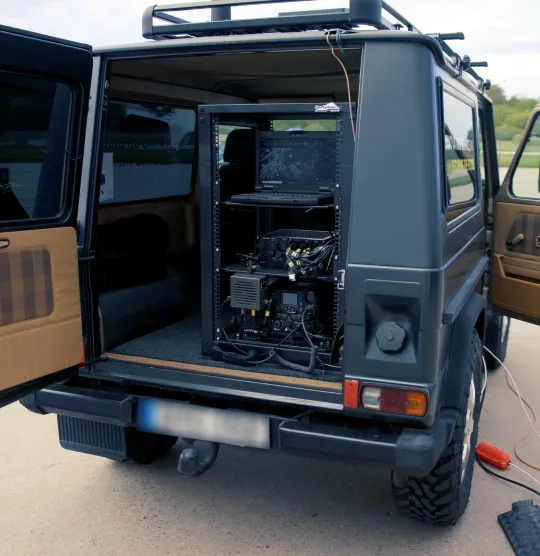
The demonstration was led by Elbit Systems Sweden, which integrated command vehicles, radios, and microwave systems into the exercise, including assets supplied to the Swedish Armed Forces as part of their long-term digitalization process.
According to Poizner, the event was designed to show NATO and European customers that Elbit Systems Sweden can provide a ready digital force network from within Europe. “The main purpose of the demonstration was to show NATO and Sweden that there is a company such as Elbit Systems Sweden with a ready solution for NATO armies,” he says.
That message depends on interoperability. NATO forces must share information, coordinate movement, and operate together under common standards. The demonstration therefore emphasized open architecture and third-party connectivity, including A-TAK integration and compliance with NATO standards and protocols.
The Systems Behind the Mission
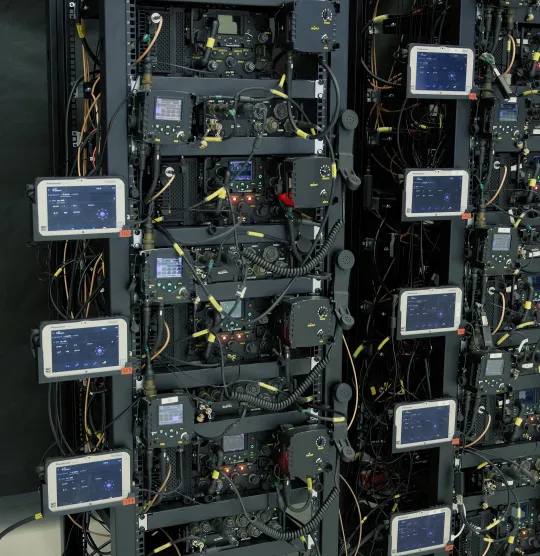
The demonstration included E-LynX, TORCH-X, and TIGER-X. E-LynX provides the software-defined radio layer for voice, data, and video transmission. TORCH-X provides the command-and-control layer, helping commanders share the operational picture, manage missions, and coordinate across echelons. TIGER-X connects different networks when multiple communication environments must operate as one.
According to Poizner, Elbit Systems has been integrating additional AI capabilities into these systems, including decision-support tools that analyze large areas and focus human attention on priority zones.
The next stage is not only connecting forces but understanding the information they produce. A fully digital force generates operational data: locations, movements, sensor feeds, reports, and mission updates. Seeing this information in real time is one capability; turning it into insight is another.