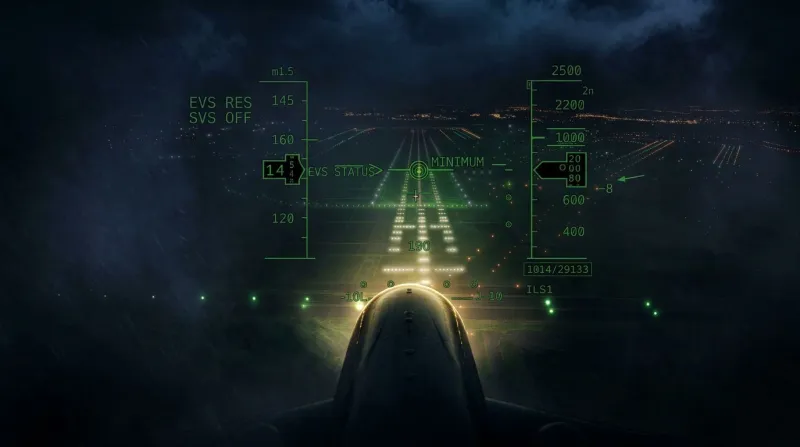
When the Runway Disappears
Fog, darkness, and difficult weather can deprive pilots of the visual cues they rely on most. Enhanced and combined vision systems are changing how flight crews see, understand, and respond to the world outside the cockpit.
Key Takeaways
- Low-visibility flight operations increase the importance of accurate, continuous situational awareness, particularly during approach and landing.
- Enhanced Vision Systems use real-time sensor imagery, while Synthetic Vision Systems create a digital representation of terrain and airport environments.
- Combined Vision Systems bring real-time sensor data and synthetic information together in a single pilot-centered view.
- Head-up presentation helps crews access critical visual and flight information while keeping their attention focused on the flight path.
- Certified Enhanced Flight Vision Systems may, under applicable regulations and approvals, provide additional operational options during low-visibility approaches.
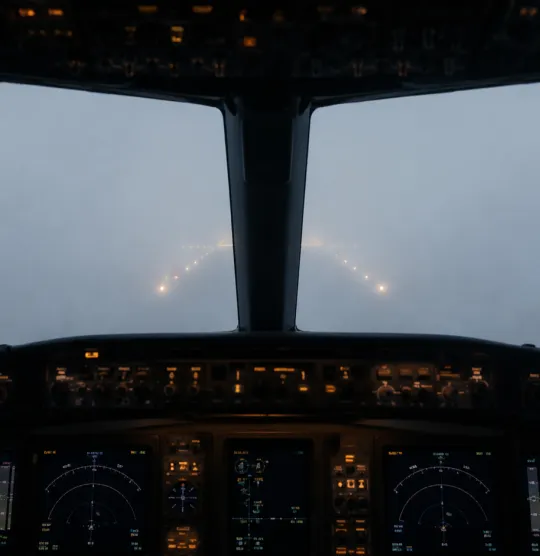
For a pilot, some of the most demanding moments can arrive when the outside world provides the least information. Fog can obscure the runway environment, darkness can make terrain and obstacles harder to distinguish, and heavy weather can reduce the time available to understand what is happening outside the cockpit. In those conditions, the challenge is not simply to see more, but to build an accurate picture quickly enough to make the right decision.
Pilots are trained to operate in degraded visual environments using instruments, but the closer an aircraft gets to the ground, the more critical an accurate understanding of the external environment becomes. This is where situational awareness in low-visibility flight becomes essential.
Dror Yahav, CEO of Universal Avionics, an Elbit Systems company says “We allow pilots to operate and land in situations that are prohibited for airplanes who are not equipped with our technology. It is a game changer for those who suffer from delays and cancellations due to weather conditions."
Three Technologies, One Objective
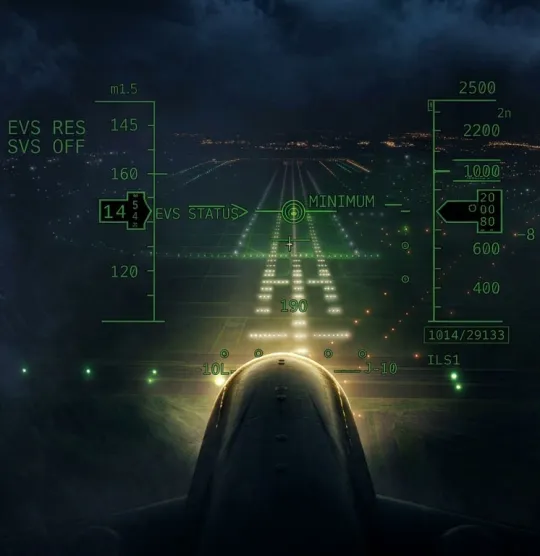
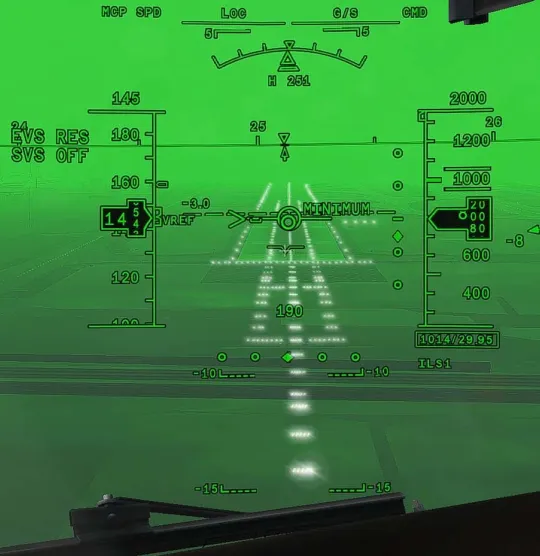
An Enhanced Vision System, or EVS, uses aircraft-mounted sensors to create a real-time image of the external scene. Multispectral solutions can combine visible-light and infrared information, helping reveal features that may be difficult to identify with natural vision in darkness or degraded conditions.
A Synthetic Vision System, or SVS, works differently. Rather than relying on a sensor image of what is immediately outside the aircraft, it generates a digital representation of terrain, airports, and obstacles based on the aircraft's position and onboard databases. Combined Vision Systems, or CVS, bring these two layers together. Dassault's FalconEye, for example, combines multispectral enhanced vision with synthetic vision in a head-up presentation, allowing pilots to select either view or use both in combination.
Universal Avionics' ClearVision EFVS similarly integrates enhanced vision, synthetic terrain, and head-up flight symbology.
Yahav Says “During approach and landing, especially in areas with challenging terrain, the pilot now gets a full awareness of the surrounding allowing him to operate at night as if it is nighttime. SVS will provide awareness in large distances while EVS will generate accurate high-resolution depiction of the near environment."
Keeping the Pilot's Eyes Forward
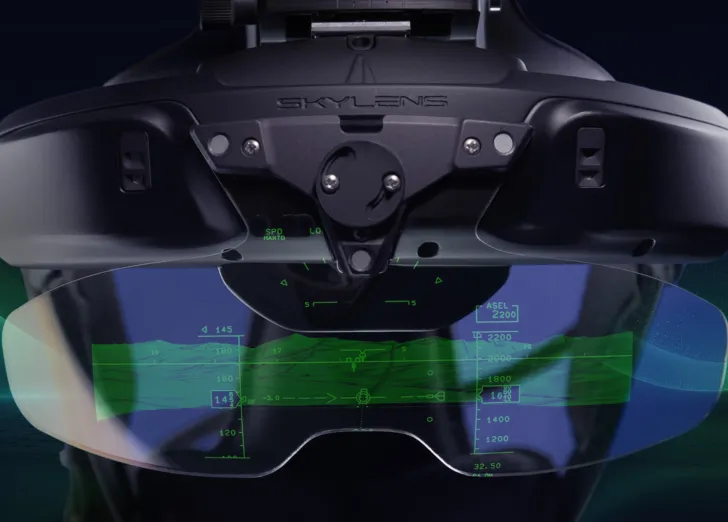
Head-up displays and wearable head-worn displays can place flight information and visual cues within the pilot's forward field of view. In Universal Avionics' ClearVision architecture, head-up symbology can be presented together with enhanced and synthetic vision, while FalconEye similarly presents combined vision information in a head-up format.
That integration is designed to help pilots maintain a continuous picture of the aircraft's position and trajectory without repeatedly shifting their attention between the outside environment and cockpit displays.
Under applicable certification and operating rules, EFVS can provide operational credit in low-visibility conditions. This can allow appropriately qualified crews flying approved aircraft to conduct certain portions of an instrument approach using enhanced flight visibility rather than relying solely on natural vision.
That distinction is important. Enhanced vision does not eliminate weather, terrain, or procedural limits, nor does it replace pilot judgment. It provides another layer of usable information and, where certification allows, can expand the options available to the flight crew when visibility deteriorates.
For operators of advanced business and government aircraft, flexibility can be a significant part of the mission. Flights may involve airports surrounded by difficult terrain, nighttime operations, or schedules that span rapidly changing weather conditions.
Aircraft manufacturers are therefore integrating advanced vision capabilities into modern flight decks. Dassault, for example, describes FalconEye as a system designed to provide situational awareness in all weather conditions, day or night, and has incorporated the technology across its advanced Falcon platforms.
Universal Avionics' ClearVision, meanwhile, has been developed as a flexible EFVS architecture supporting fixed and wearable display configurations across different aircraft applications.
Yahav adds “for VIP customers in the business or governmental domain, getting to destination on time can make a huge difference. Those customers will use the best available technology to ensure mission completion, without jeopardizing their safety. This is why our system is so popular in business aviation and for VIP government customers."
Specs
- EVS – Enhanced Vision System: Real-time imagery of the external environment generated by aircraft-mounted sensors, which may include visible-light and infrared technologies.
- SVS – Synthetic Vision System: Computer-generated representation of terrain, airports and obstacles based on the aircraft's position and onboard databases.
- CVS – Combined Vision System: Integration of sensor-derived enhanced vision and synthetic vision into a combined presentation.
- EFVS – Enhanced Flight Vision System: A certified flight-vision architecture that combines real-time external imagery with flight information in a head-up presentation and may enable operational credit under applicable regulations.
- FalconEye: Dassault's head-up Combined Vision System, combining multispectral enhanced vision and synthetic vision to support all-weather situational awareness.
- ClearVision EFVS: Universal Avionics' solution combining head-up symbology with enhanced and synthetic vision, with display options that include conventional and wearable configurations.
FAQ
What is an Enhanced Flight Vision System?
An Enhanced Flight Vision System uses real-time sensor imagery together with flight information presented to the pilot in a head-up format. Depending on its certification and the applicable operating rules, an EFVS may also provide specific operational credit during low-visibility instrument approaches.
What is the difference between EVS and SVS?
EVS shows information derived from sensors observing the actual external environment in real time. SVS creates a computer-generated view based on the aircraft's position and stores terrain, airport, and obstacle data. The two therefore provide different but complementary types of information.
What is a Combined Vision System?
A Combined Vision System integrates enhanced and synthetic vision, allowing pilots to benefit from both real-time sensor information and a broader digital representation of their surroundings. FalconEye and Universal Avionics' ClearVision demonstrate different implementations of this approach.
Can enhanced flight vision help pilots land in fog?
Certified EFVS technology can support low-visibility approach and landing operations and provide operational credit when natural visibility is restricted. The actual capability depends on the aircraft, system certification, crew qualifications, and applicable regulations.
Why are enhanced vision systems useful at night?
Low-light conditions reduce the external visual cues available to pilots. Multispectral enhanced vision technologies can use visible and infrared sensing to provide additional information about the runway environment, terrain, and other features that may be difficult to identify with natural vision alone.
Important Notice: Certain blog articles may contain forward-looking statements and are not intended to provide business, financial, or investment information. Please review our full disclaimer here.