
Common Open Architecture Panoramic Sight
Part of Elbit Systems’ COAPS™ product family, COAPS™-D is a next-generation system with modular architecture and platform-agnostic design, enabling seamless integration with many types of MBTs and IFVs.
COAPS™-D is a dual-axis, gyro‑stabilized panoramic EO/IR sighting system designed for modern armored platforms. It supports long-range observation, target acquisition and precision laser designation under all operational conditions.
Built on an open, modular architecture, COAPS™-D integrates seamlessly with main battle tanks (MBTs), infantry fighting vehicles (IFVs) and other combat platforms, enabling rapid deployment across diverse fleets.
The system combines high-performance electro‑optical sensors with advanced video analytics, delivering continuous day-and-night situational awareness and accurate targeting in dynamic environments.
Sensors & Targeting Suite
COAPS-D integrates a multi-channel payload designed to ensure reliable detection and engagement:
- Thermal Imaging (MWIR SXGA): Advanced cooled thermal imager with continuous zoom
- Day Camera (FHD VIS-NIR): High-resolution daylight and low-light imaging
- Laser Rangefinder: Eye-safe range measurement
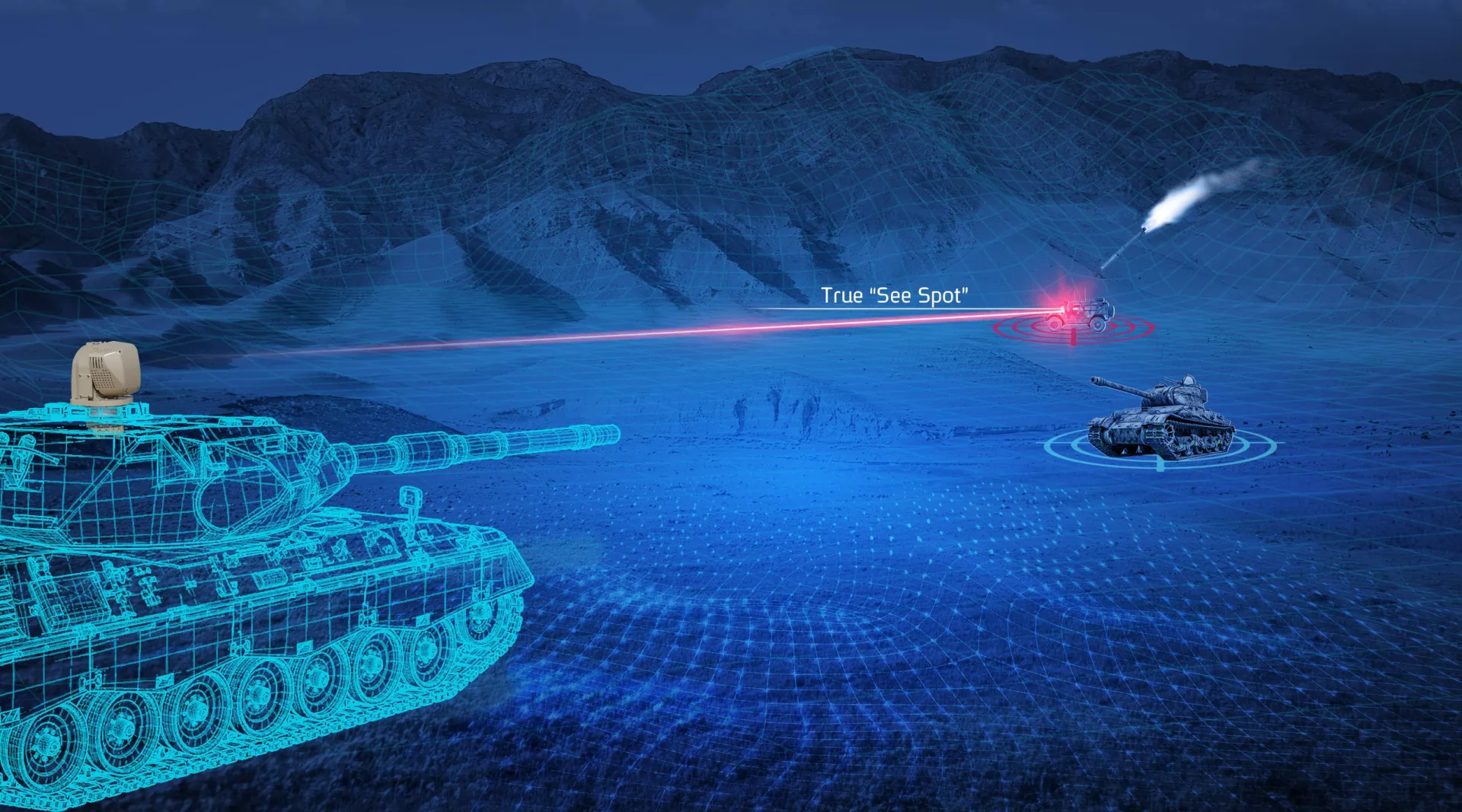
- Laser Designator: High-energy, precise designation for guided munitions
- MWIR “See-Spot” Channel: Enables accurate tracking of laser spots
- Optional NIR Pointer: Additional targeting support
The system maintains precise alignment through automatic boresighting and sensor fusion, ensuring consistent accuracy during movement.
Platform Integration
COAPS-D features a platform‑agnostic design with modular configuration, enabling:
- Installation on legacy and next-generation armored vehicles
- Interoperability across different mission systems
- Scalable upgrades and configuration flexibility
Key Capabilities
Operational Advantages
FAQ
COAPS-D is used for surveillance, target acquisition and precision laser designation on armored platforms, enabling accurate engagement of targets in day and night conditions.
COAPS-D is platform-agnostic and can be integrated with main battle tanks (MBTs), infantry fighting vehicles (IFVs) and other combat systems.
Yes. The system combines MWIR thermal imaging and VIS-NIR sensors, enabling continuous 24/7 operation in all lighting and weather conditions.
It combines stabilized panoramic viewing, multi-sensor fusion, AI-based analytics and precision laser designation, allowing faster detection, tracking and engagement.
Optional AI-driven analytics such as ATR (Automatic Target Recognition), VMD (Video Motion Detection) and WAPS enhance situational awareness and reduce operator workload.
The system uses stabilized optics, sensor fusion, auto-boresight alignment and a “See-Spot” channel to maintain precise targeting, even when both platform and target are moving.